
HP’s Open Industrial Filament System Made North American Debut at AMUG 2026
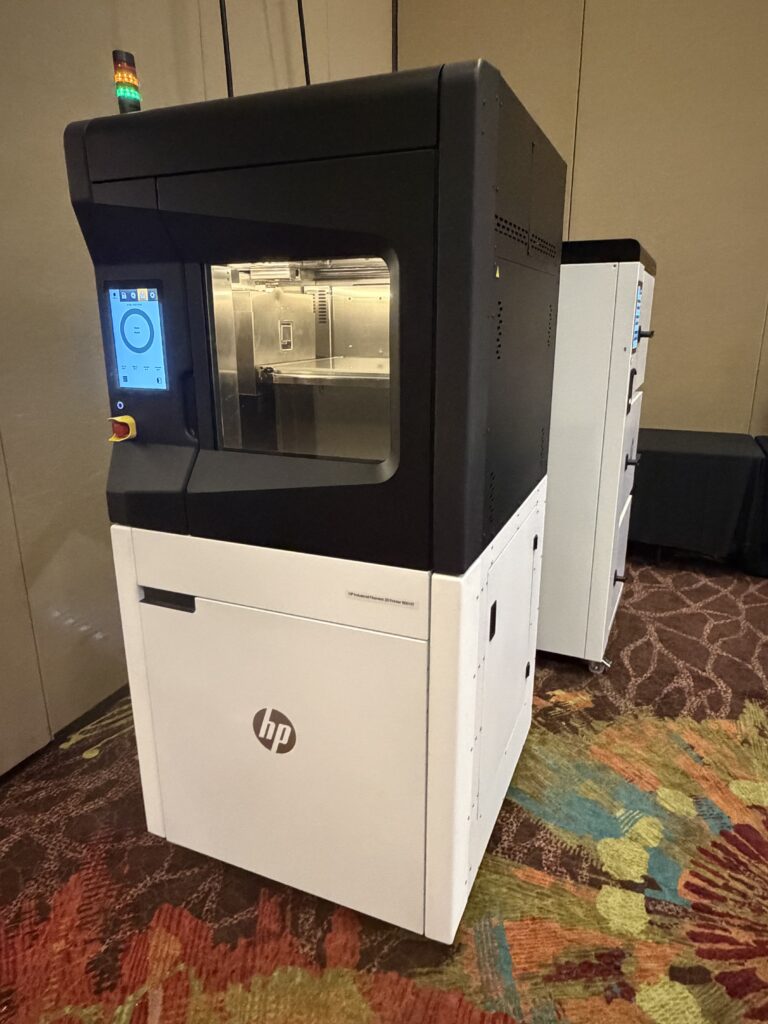
At Formnext 2025, HP Additive Manufacturing revealed a major step in its broader portfolio expansion strategy with the announcement of a new 3D printer, the HP Industrial Filament 600 High Temperature (HP IF 600HT). The industrial AM system recently made its North American debut at AMUG 2026 in Reno, Nevada. The HP IF 600HT is modular, built on an open materials platform, and engineered for high-temperature and advanced engineering-grade materials. This offers manufacturers more flexibility with the polymers they can use, while still enabling them to maintain the necessary industrial reliability.
I spoke to Eric DuPaul, HP Additive Manufacturing Category Manager, at AMUG to learn more about the system. DuPaul’s job is managing the product within the region, so he’s helping to launch the HP IF 600HT, and the 12-filament Material Management System (MMS) that goes with it, in the Americas.
“So we take that product from inception to maturity, making sure that it’s getting out into the market, making sure that everybody’s trained, getting end user customer feedback, so that as we’re preparing for a future product, we take all of that into consideration,” he explained.
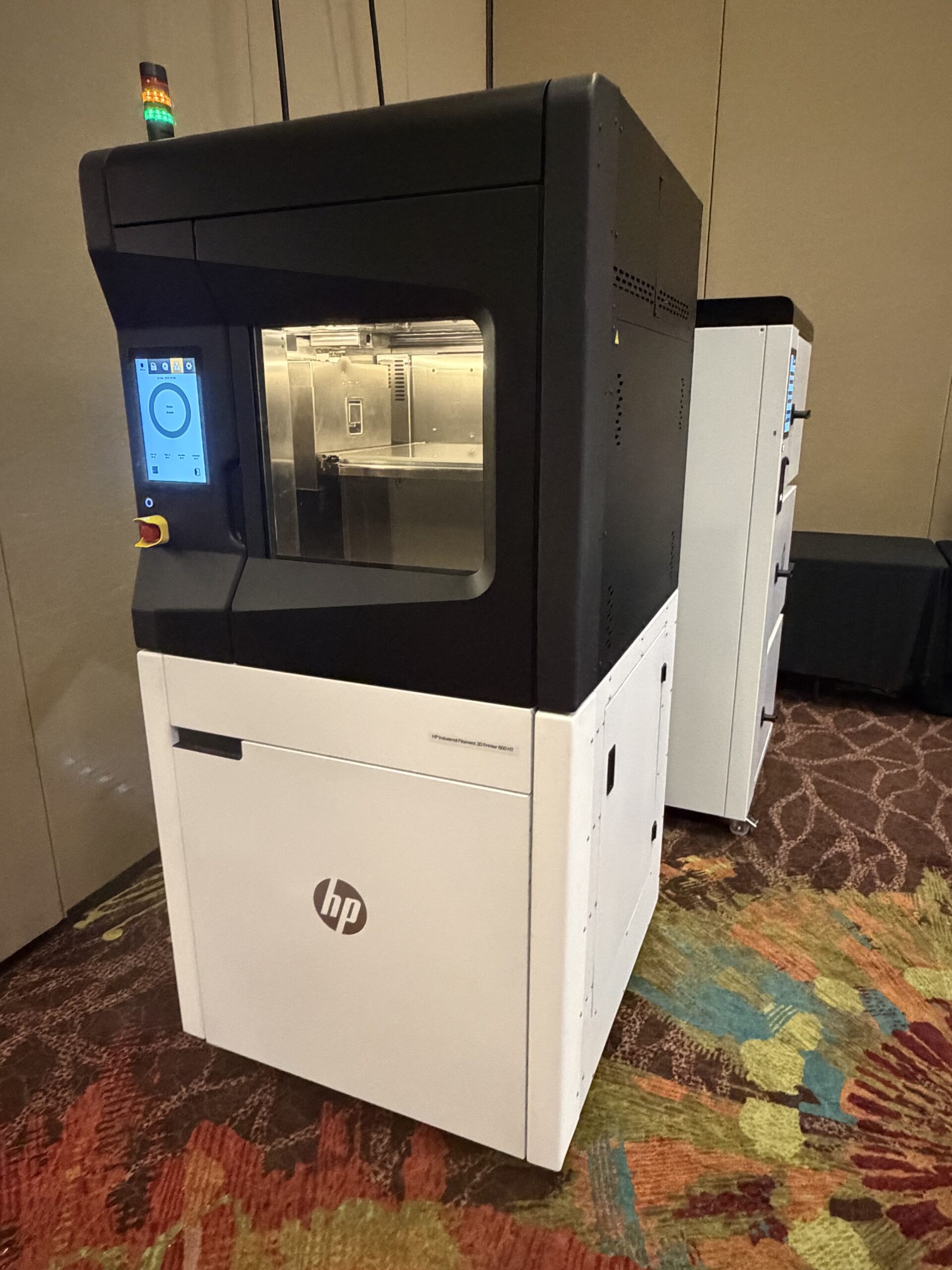
HP IF 600HT 3D printer
The printer’s build volume is 380 x 380 x 420 mm. The system is modular, and its first module can reach 280°C, while the second can get up to 360°C, and the third 500° C. At these temperatures, it can easily handle the highest-performance polymers, all the way from ABS and ASA to PEEK and 10%-30% carbon fiber reinforced and glass-filled polymers.
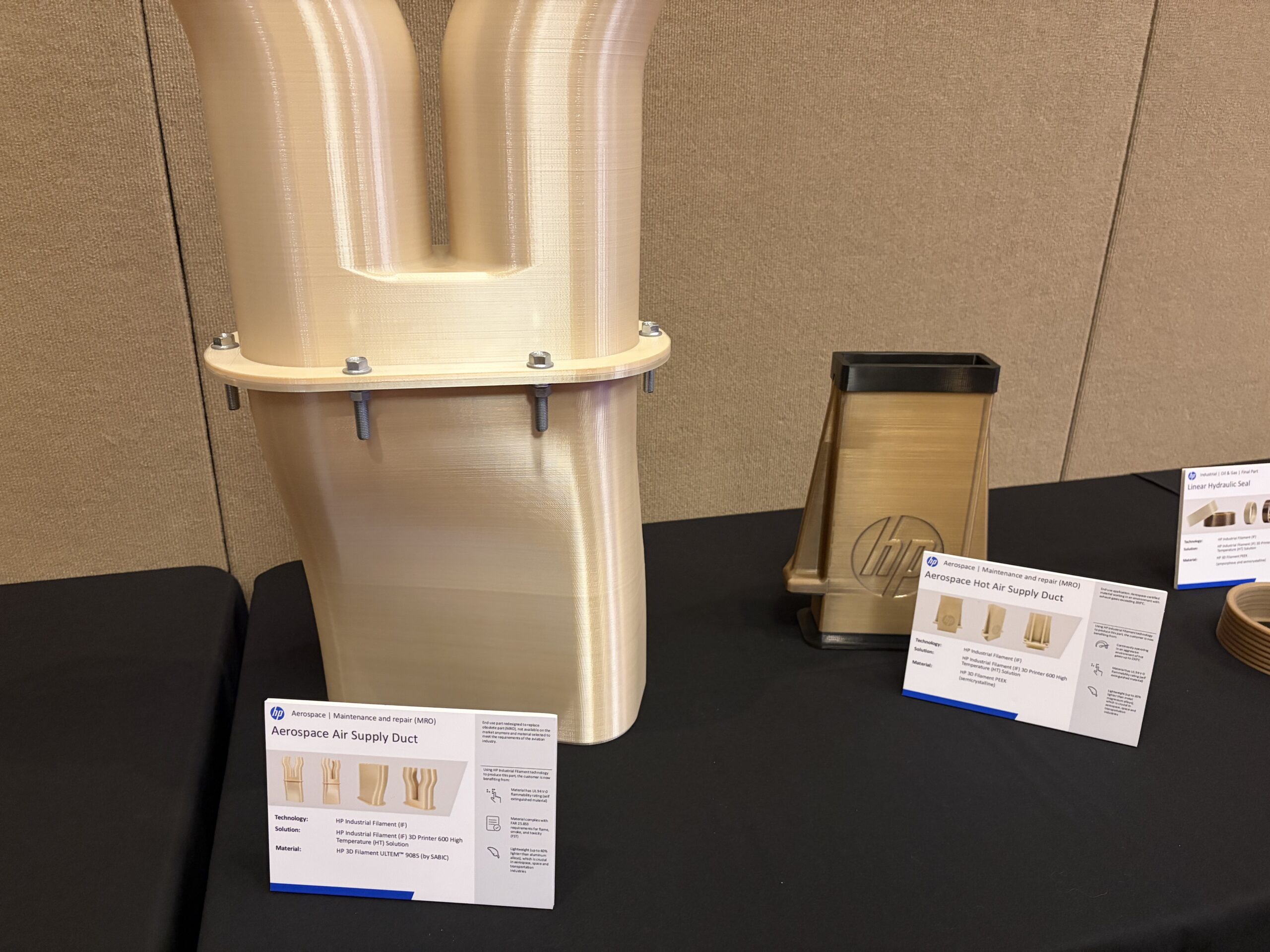
Obviously, with such high-temperature material choices, one of HP’s target applications for the solution is aerospace; railway is another. Additionally, DuPaul and Krzysztof Roguski, an HP expert for the product who shared the printer specs with me, are working with several medical companies that are interested in using the technology for spinal implants and ankle wedges.
“It’s just fascinating the applications that the medical community is using this technology for,” DuPaul said. “And I think they’re just scratching the surface of it. I’m hopeful for the future on the medical applications.”
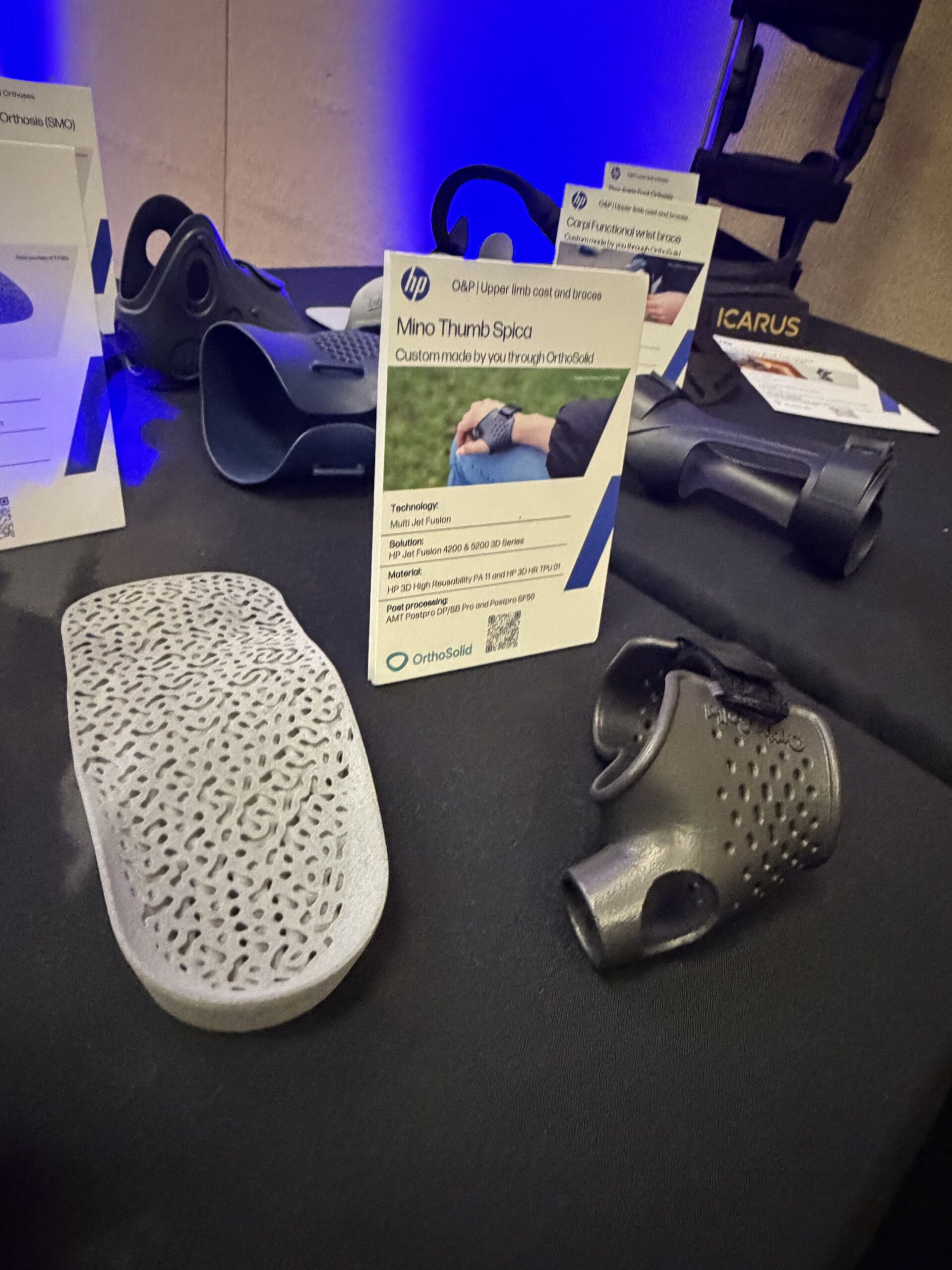
He shared a story with me about the first company he worked with when he switched from the 2D side to the 3D side at HP. Quorum Prosthetics in Colorado primarily works with athletes who have had below the knee amputations. Using HP’s Jet Fusion technology, they developed an adjustable sleeve for amputees that “literally changed people’s lives.”
While Multi Jet Fusion has been groundbreaking in its own right, it is limited when it comes to materials. Now, with the industrial filament solution, DuPaul said “there’s other things within the prosthetics world that we’re probably going to start seeing open up for us because of the material options that we have.”
DuPaul explained that because Jet Fusion is so limited when it comes to materials, HP really wanted to expand that capability, and “industrial filament, or fused filament, is kind of the best way to do that.” The HP IF 600HT is powered by a 3DGence engine, “but we put the HP magic into it.”
“And it’s not just the logo. There’s up to a hundred different things that have been altered and changed.”
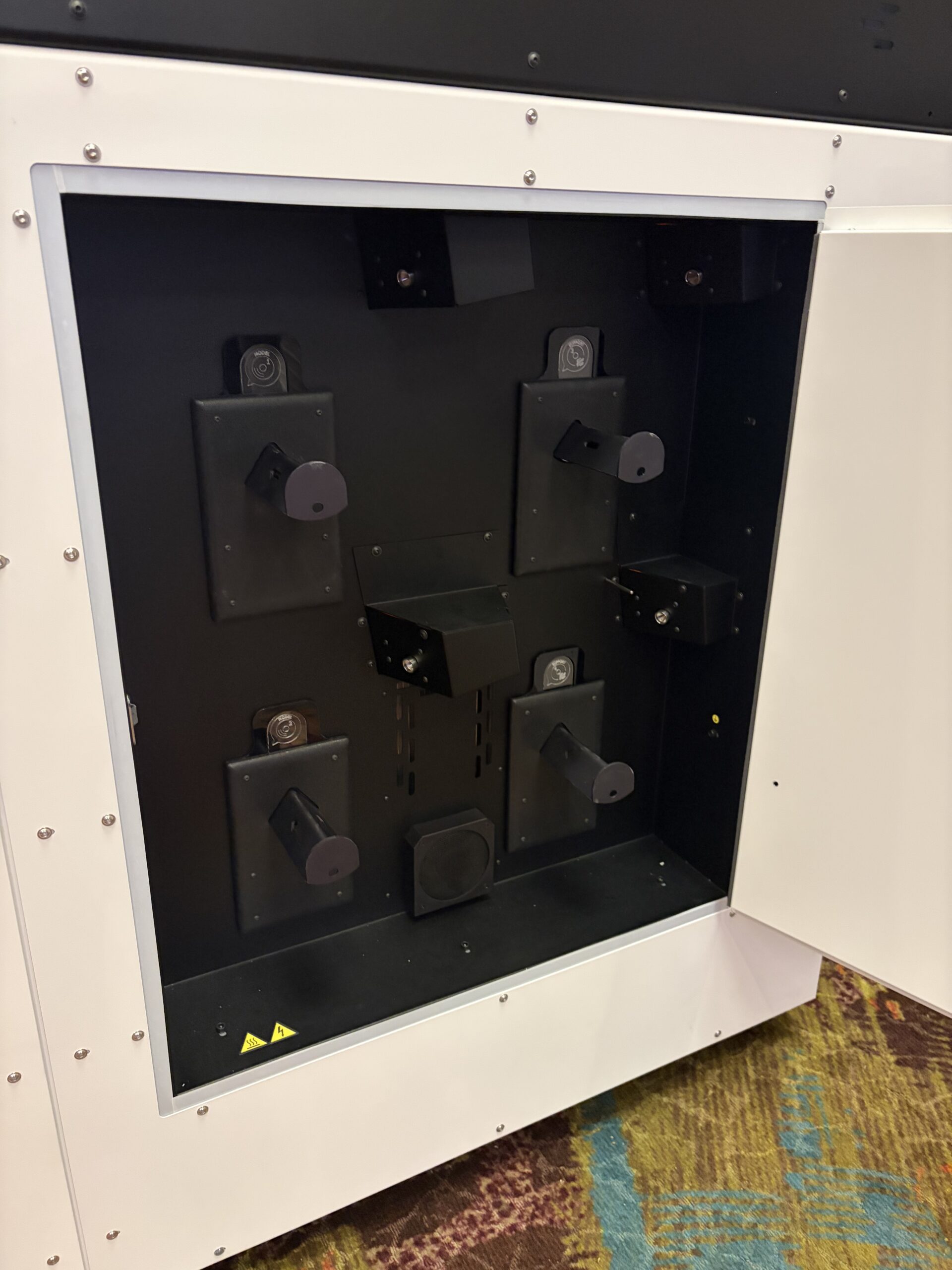
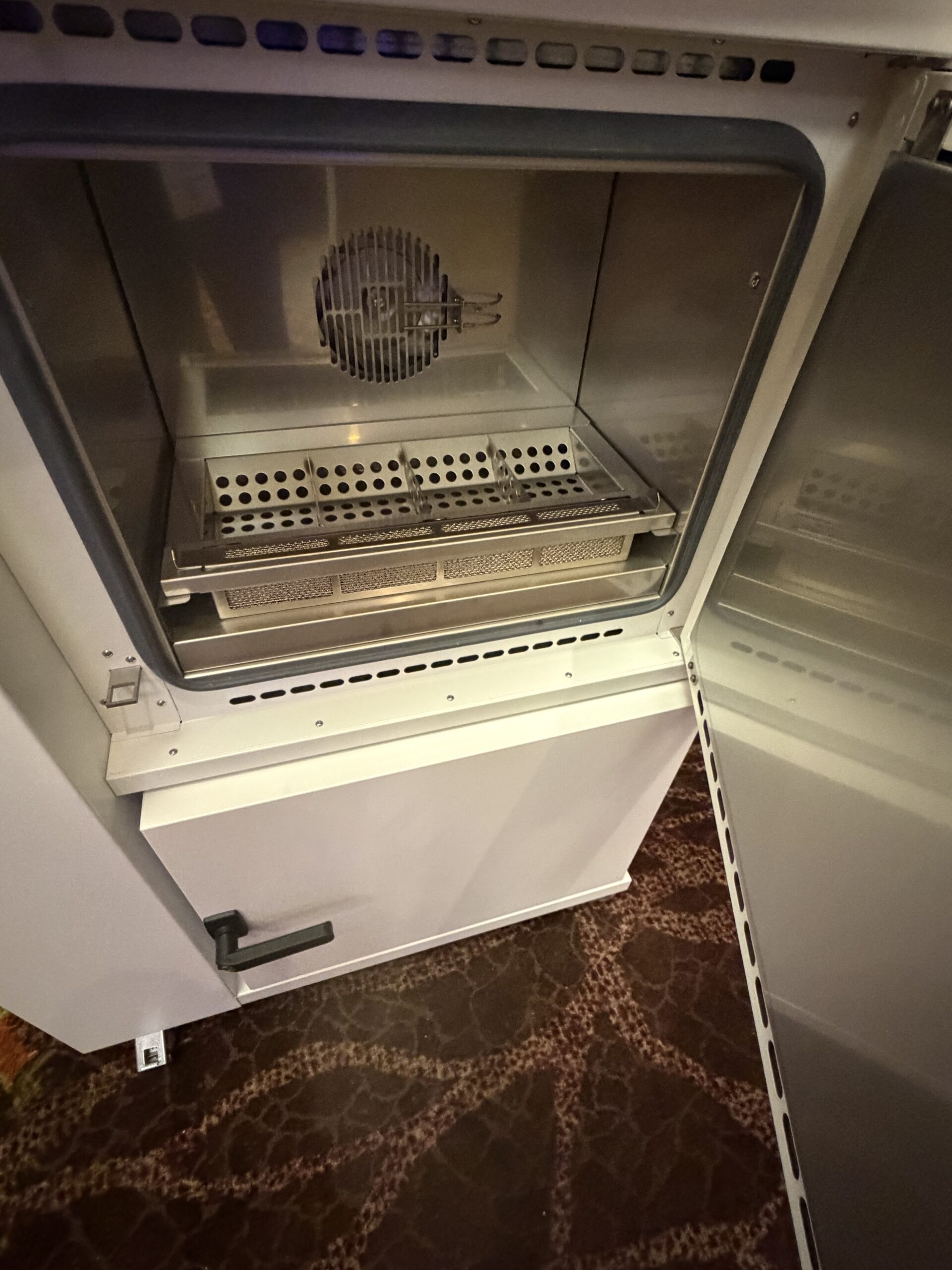
The first is UL certification, which provides cybersecurity for cloud-connected customers, though the printer can also be non-cloud connected if the user wants. But DuPaul says what really sets it apart from the other products in its market is that the acquisition price is less, the filament price is less, and it’s an open system.
“The profiles for the HP materials are already loaded into the machine, and those have been tested and certified,” he explained. “But if a customer wants to buy a third party material and run it through, they can use the existing slicer to build out a profile for that, using the existing profile for something similar.”
Customers can also work with HP Professional Services to create a custom profile for a third party material. In this case, HP will take the data from the material manufacturer and independently test it first, before handing the profile off to the customer.
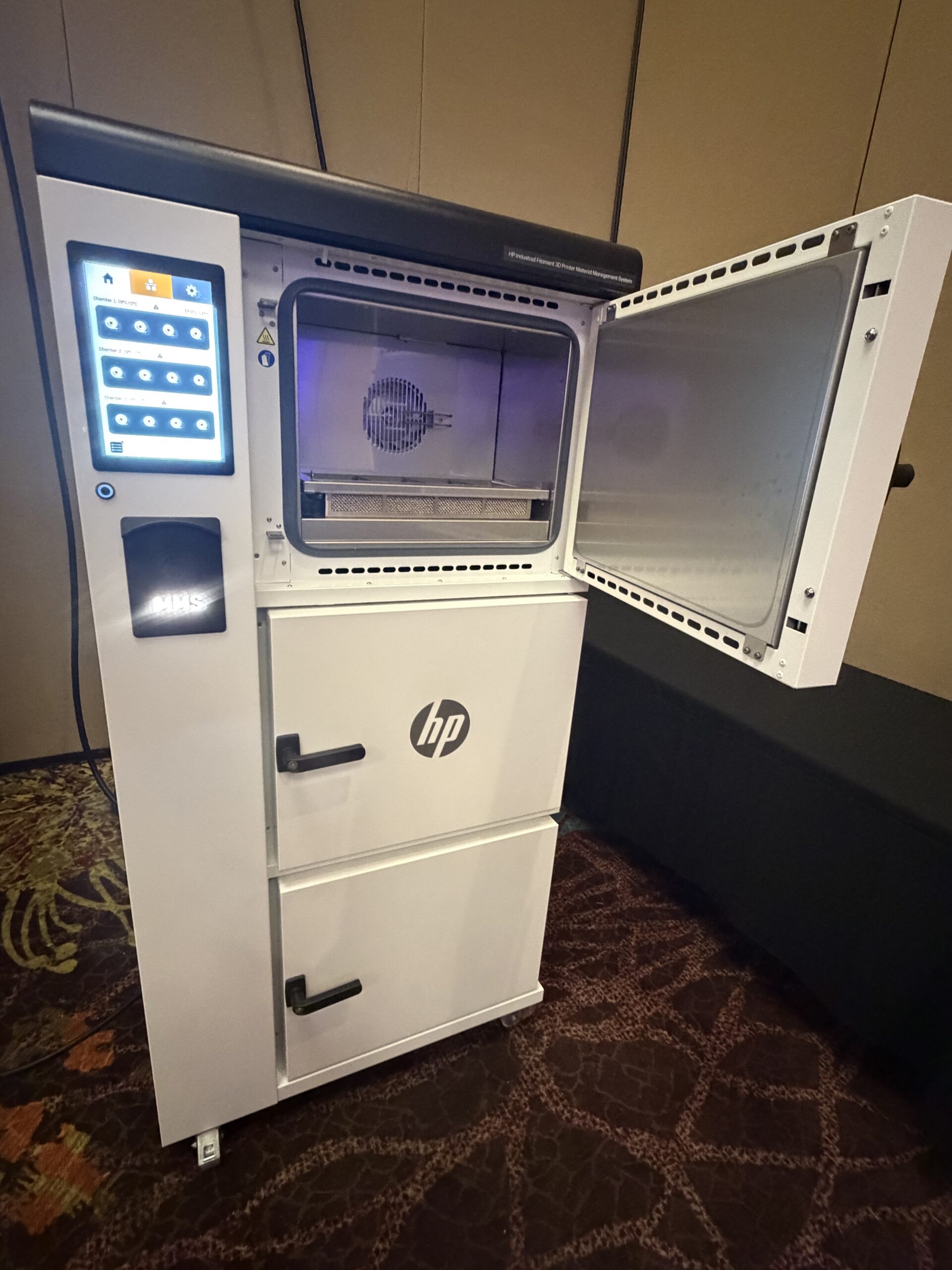
HP Material Management System (MMS)
DuPaul also said that things like the print speed and dimensional accuracy of the system are “on par with the industry leader.” But in terms of price, the acquisition and filament costs of HP’s newest offering are “much less than the main competitors in that market.” Plus, because it’s an open system, you can potentially save even more by using third party materials.
I asked if they anticipated more people wanting to use third party materials, rather than sticking with HP’s tried and true options. DuPaul said his best guess is that about 80% of users will use the existing HP materials, while 20% will use third party. But, he did note that he’s basing those numbers off of existing customers.
“With Jet Fusion, we don’t have a lot of universities,” he explained. “So I foresee universities and technical schools looking at this technology so they can then develop their own filament, or use a third party filament as part of a grant.”
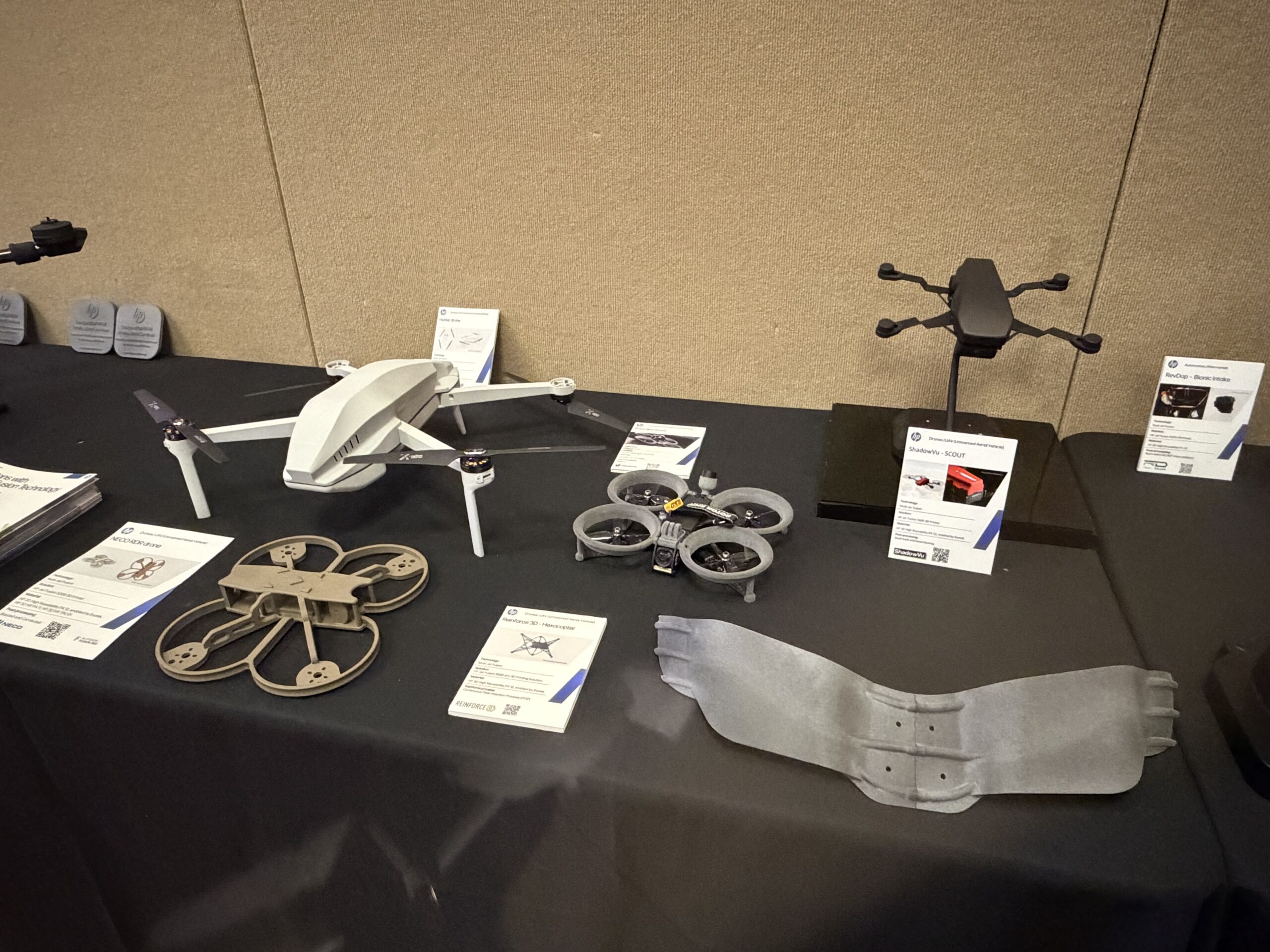
The machines will be heading to Boston for RAPID+TCT in a few weeks. Then in May, partners will be able to perform their demos and benchmark tests on the printer.
“They’re showing their trust in us by making the physical investment in the product itself. So each of the partners will have their own machine so they can do all the customer testing benchmarks. We’ve done that with the Jet Fusion as well,” DuPaul said. “If you think about it, it’s a substantial investment, and a trust that they have in HP, to say, ‘We’re behind the product.’”
Orders can be placed now for the combined solution of the HP IF 600HT and the MMS, and they will be available in the U.S. and Canada this June, sold through authorized resellers M5D, TPM, NCS, MatterHackers, Impact Systems, and GoEngineer in Canada.
“Personally, I’m just super excited to see what this technology does in the next few years for us. It’s going to open up customers for us,” DuPaul said. “I’ve been in front of those customers. They would love to work with us. But we just didn’t have what they needed, and now we do.”
If you’d like to know more about HP’s new industrial filament offering, tune in to their webinar, “An Inside Look at HP AM’s New Production-Ready Solution,” at 11 am EST today.
Featured image courtesy of HP / all other images courtesy of 3DPrint.com
